Social Relations, Property and Power
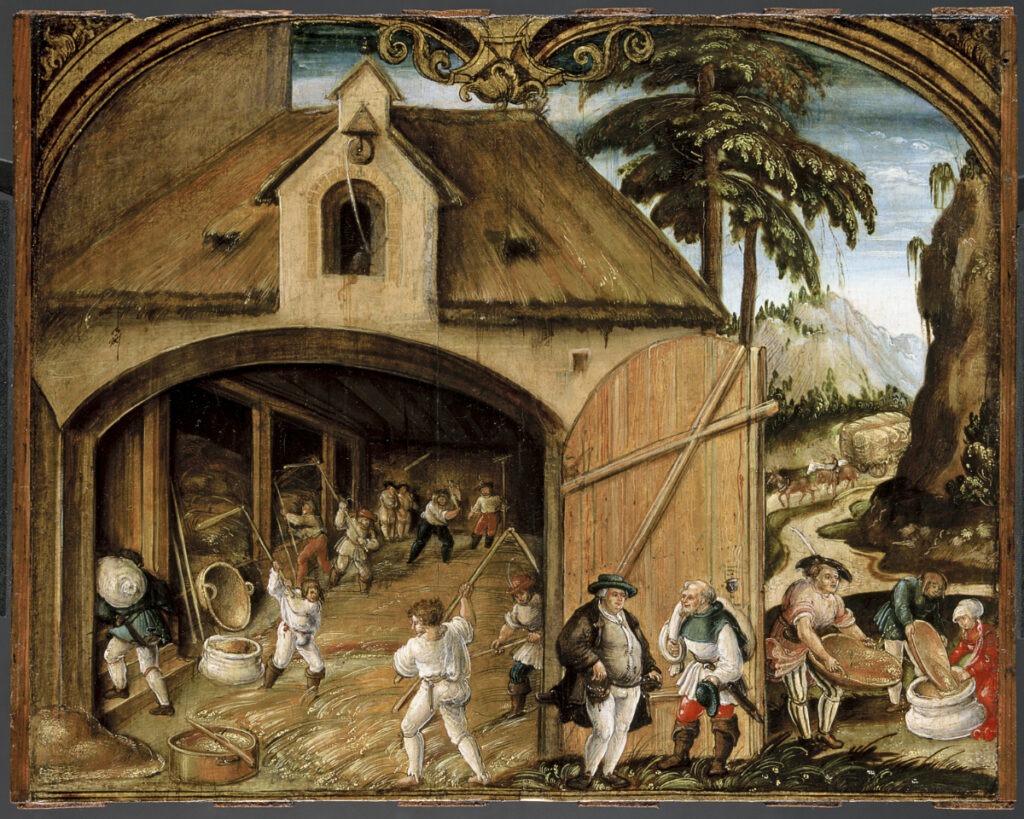
Tafelgemälde auf Lindenholz (um 1516/1525)
von Hans Wertinger (Landshut um 1466-1533)
© Germanisches Nationalmuseum Nürnberg (Gm1238)
Abgebildet ist eine weit geöffnete Scheune, in der von Knechten Getreide ausgedroschen wird. Vor dem Tor steht ein beleibter, bürgerlich gekleideter Herr im Gespräch mit einem älteren Mann, der als Zeichen seiner Subordination den Hut gezogen hat. Rechterhand füllen zwei Männer und eine Frau vom Spelz befreite Getreidekörner in einen Sack. Im Hintergrund ist ein mit Getreidegarben hochbeladener Wagen zu erkennen, der von vier Pferden gezogen wird. Vermutlich handelt es sich bei der Lieferung um bäuerliche Abgaben (Zehnt- oder Zinskorn). Ob der Mann mit Hut der Empfänger dieser Naturalabgaben war oder ob er lediglich als örtlicher Vertreter eines Herrn oder einer Herrin auftrat, ist nicht zu klären. Dienste und Abgaben der Landbevölkerung bildeten die Lebensgrundlage der privilegierten Gruppen (Adel, Geistlichkeit, städtisches Patriziat und Gelehrte).
The organisation of society formed a crucial element in the remarkable development of the countryside in the North Sea area in the last 1500 years. Vital questions are: who owned the land? Who gained the profits from its exploitation? How was the use of rural resources controlled and changed? These questions have no simple answers, because the land has been subjected to competing claims, varying from region to region. In early times peasants mostly possessed and worked their holdings, but lords took much of the produce, and had the ultimate control over the land. In more recent times the occupiers and cultivators gained stronger rights over their farms. Neither lord nor peasants were free agents because communities governed the use of common lands. Change came from within the society, for example from the tension and negotiation between lords and peasants, and the growing importance of the state and its policies.